☝ Select a book to learn more
Author · Historian · French Quarter Proprietress
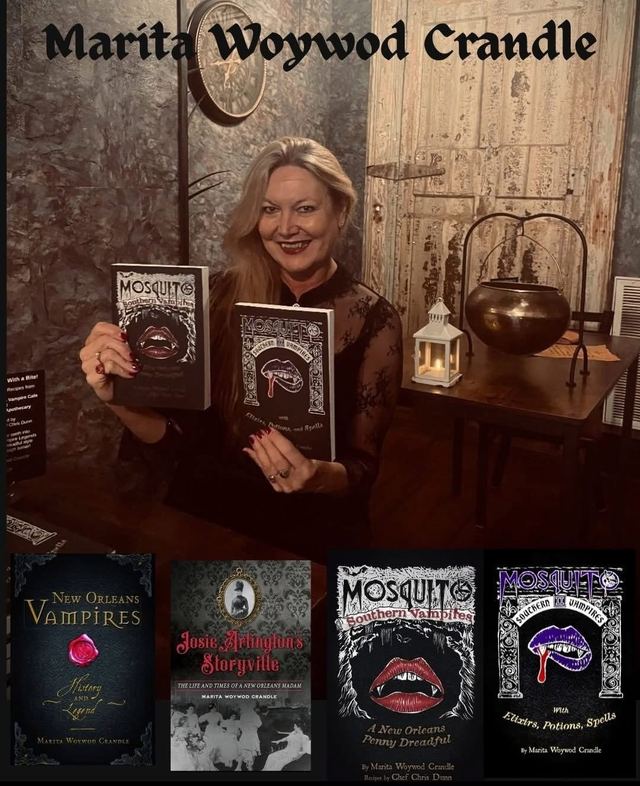
Marita Woywod Crandle
“Every fairy tale has its dark period.”
New Orleans has always been a home for creatures of the night. Marita digs through the city's history to find where its legends began, from the Casket Girls and the Comte St. Germain to the Carter Brothers, then gives them new life in gothic fiction you can taste, sip, and walk into.
Enter the Contest: Win the $3,000 Hand-Bound Edition →
The Carter Brothers
Marita Woywod Crandle’s new novel offers secrets and surprises
Fore-edge painting is a unique art form where a watercolor painting is crafted on the fanned-out gilded edges of a book.
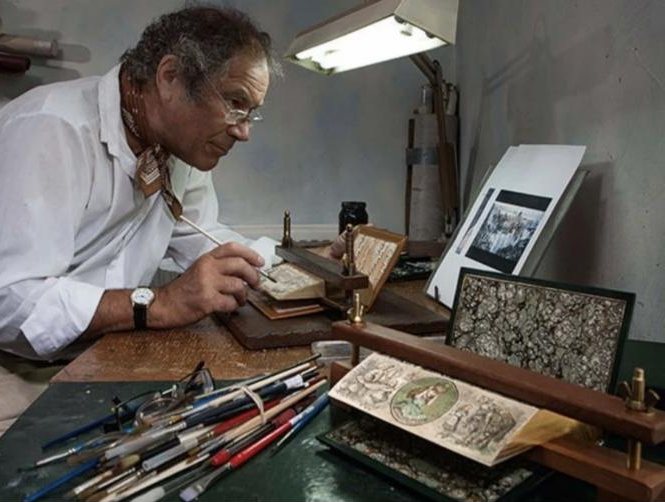
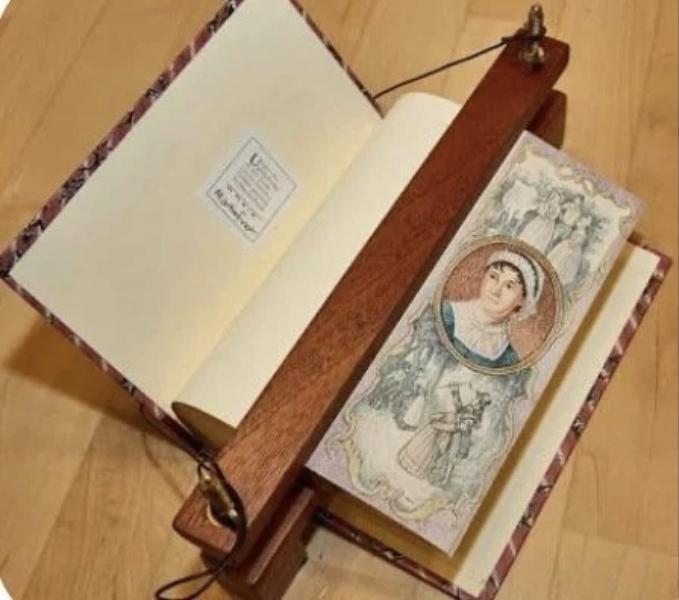
The Carter Brothers’ includes a painting that reveals a secret within the book and a watercolor will be crafted by Royal Honor MBE recipient Martin Frost, one of the very few professional fore-edge painters in the world with over 50 years of experience. Frost plans to come from England for the book release to draw the winner of this special edition. All pre-sales are eligible for a chance to win the book and will be available through Barnes & Noble, Amazon, and Books-A-Million.
Two deranged serial killers claiming to be vampires are hanged at their own request in the early 1900s. When their bodies mysteriously vanish from their tomb, the legend sleeps — until 2014, when an archaeologist accidentally awakens them following a building collapse next to their old home in the heart of the French Quarter.
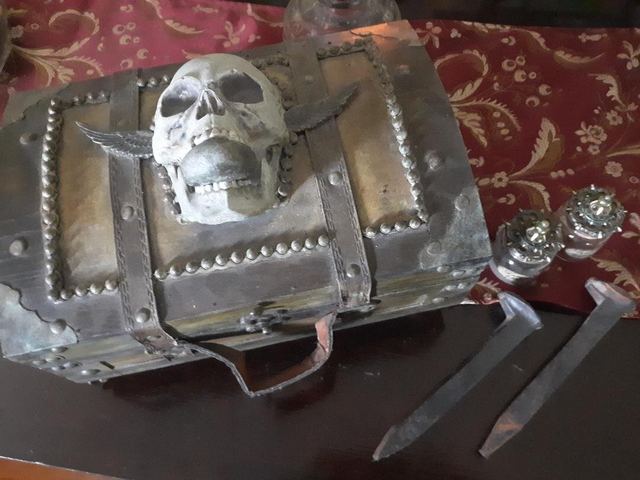
Get notified as soon as pre-orders go on sale — and enter for a chance to win the $3,000 one-of-a-kind leather hand-bound edition that includes the secret vanishing painting.
The Library
Choose a book from the shelf above, or start here:
You will learn more about New Orleans and about vampires than you could have imagined.Rickey Pittman, Bard of the South, on Mosquito
Her Story
About Marita
Marita Woywod Crandle has always had a fancy for the magical side of life. That makes New Orleans, with its creative atmosphere, a perfect match for this German transplant.

Before the French Quarter, Marita had a successful marketing career in California: ad designer and staff writer for the Beverly Hills Courier, Director of Marketing for George Elkins Company Real Estate and for Coldwell Banker, President of Marketing for Home Savings of America, and Director of Marketing for Ashten Products.
Then came the 2001 business trip. Once she stepped into the French Quarter, her life changed.
Life's Magic
The City Wanted Her There
On the plane back to California, Marita realized she had somehow rented an apartment on Royal Street. A few weeks later she came back for what she thought would be a quick Halloween weekend, and met Steven Crandle, the man who would become her husband. She sold her house in California over the phone, and just like that she and Steve were driving to New Orleans with her dogs and everything she owned.
For more than eleven years she tended bar and managed Johnny White's on Bourbon Street, the tiny joint that stayed open through Hurricane Katrina.
On New Year's Eve 2003 she opened Boutique du Vampyre. Years later came her little vampire speakeasy, Potions, which also happened to open on New Year's Eve. During the pandemic she took over the restaurant next to the Boutique. With Chef Chris Dunn she tore it down to the studs and rebuilt it as the New Orleans Vampire Café in a single month, just in time for another New Year's Eve opening.
Two years later, driving up St. Peter Street, she told Steve, “But, that's the best location in the French Quarter.” A week later the phone rang to say it was available. The Vampire Apothecary opened on April 1st, her favorite holiday. Chef later showed her that, before 1582, the new year was celebrated on April 1st.
Marita no longer questions the magic of the French Quarter. She expects it.
At Home
Fairytale Homes
Marita loves animals. Since moving to the French Quarter she has rescued more than 650 dogs and placed every one of them in a fairytale home.
She and Steve divide their time between the French Quarter and Lakefront, with their German Shepherd, Zulu.

On Screen & In Print
- 2025Vamp Chat with Dan & Eva, S3 E2: “NOLA & Sinners”
- 2020The UnXplained (History), “Vampires and Werewolves”
- 2026Travelmag: This Tiny New Orleans Boutique Is a Moody, Magical Haven for All Things Vampire
- WWL-TVBar that stayed open during Hurricane Katrina remembered in new book
- WGNOThe only real vampire shop in the United States is in New Orleans

Historical fiction is Marita's passion. Before you can indulge in the fiction, you have to know the history, and the fun lies in finding the wormholes that lead to fascinating information.
- I The Convent Attic A private visit to the sealed attic of the Old Ursuline Convent, where the Casket Girls are said to sleep.
- II Comte St. Germain An immortal count, a secret aria, and a mural in England that proved the story true.
- III The Sorcerer's Dance Marie Laveau and a secret voodoo meeting by Bayou St. John, from an 1873 newspaper.
From Marita's Notebook
Rules of Research
- ILearn how to ask the right questions.
- IIWhen you think you've discovered everything possible about your topic, look deeper. That's when you discover the juicy stuff.
- IIIDon't be afraid to reach out to people that seem out of reach.
- IVTackle your research from more than one direction.
- VDon't be quick to believe everything you hear, read, or see.
Bite I
The Convent Attic
Blessed steel nails
sunk into
Convent sacred wood
Light slivers
gleam in where
the vampires brood
Impetuous
vampire's
concentration fixed
Nails push out
one by one
lives hang intermixed
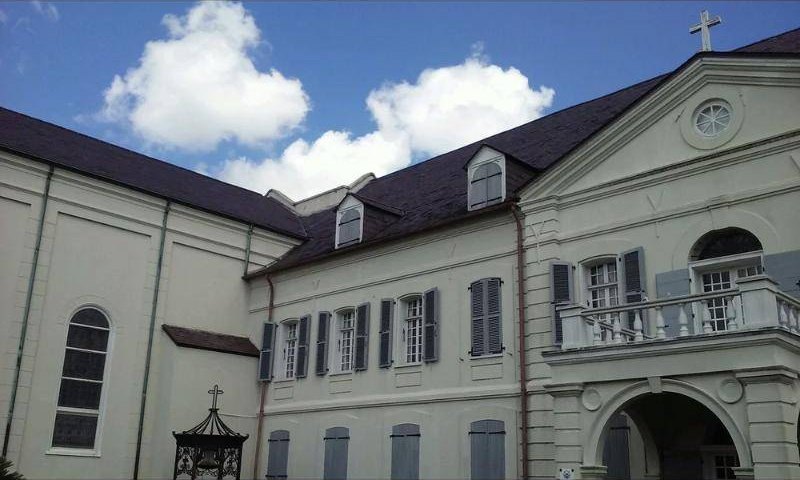
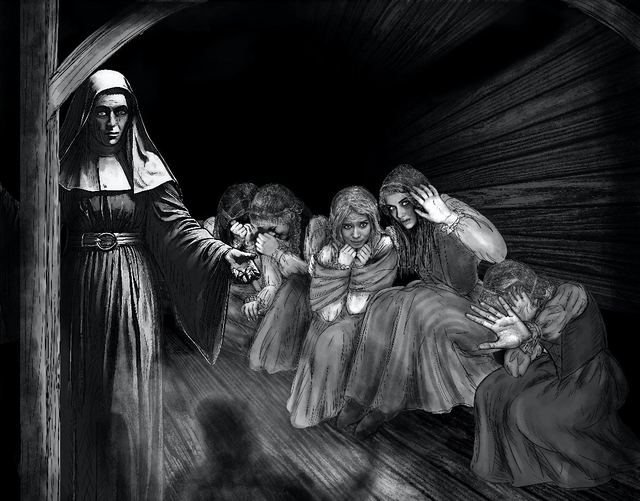
Nightly, groups of tourists stand in the dark, across from the Old Ursuline Convent at 1100 Chartres Street, engaged in the legend of French vampire maidens held captive for close to three centuries in the third-floor attic. The third-floor dormer windows hold the fascination for this mystery, as their shutters remain tightly sealed. A unique circumstance, as no other top-floor shutters in the French Quarter can be found closed. Given that heat rises, in a city with intense humid temperatures, sealed windows would create an impossible situation for any source of comfort. A convent, ingenues from France and casket-shaped trousseaus stored in the mysterious attic become the ingredients of a vampire legend with a romantic twist.Marita Woywod Crandle
Dear friends and vampire enthusiasts,
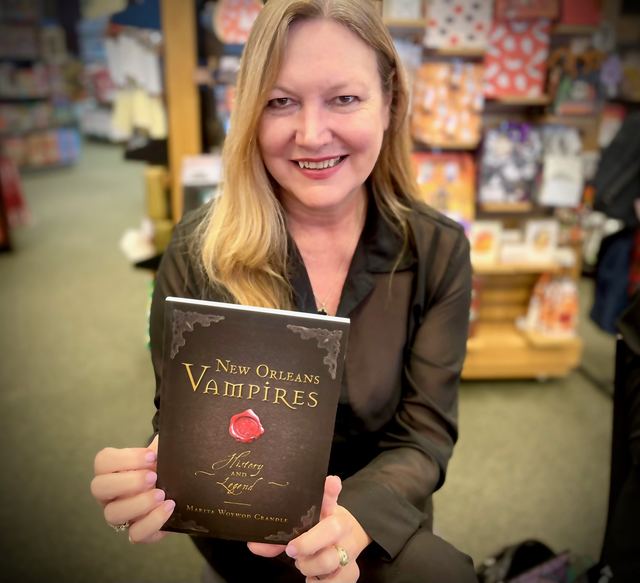
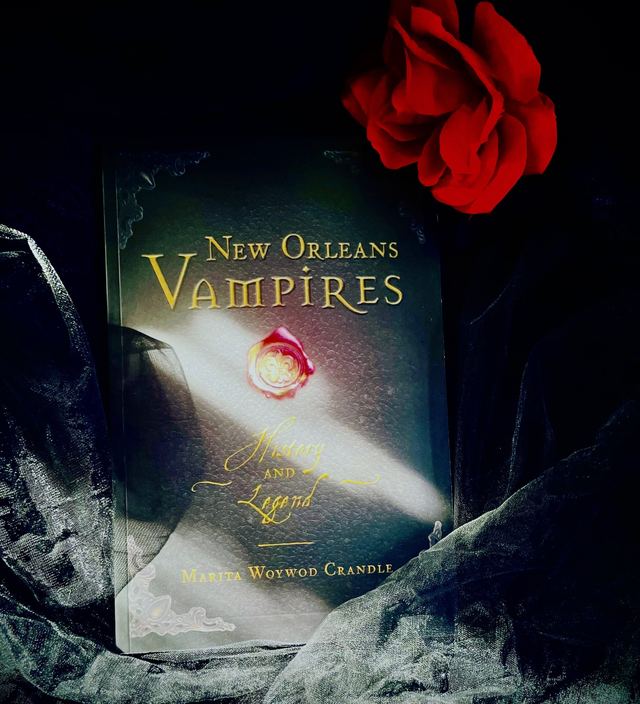
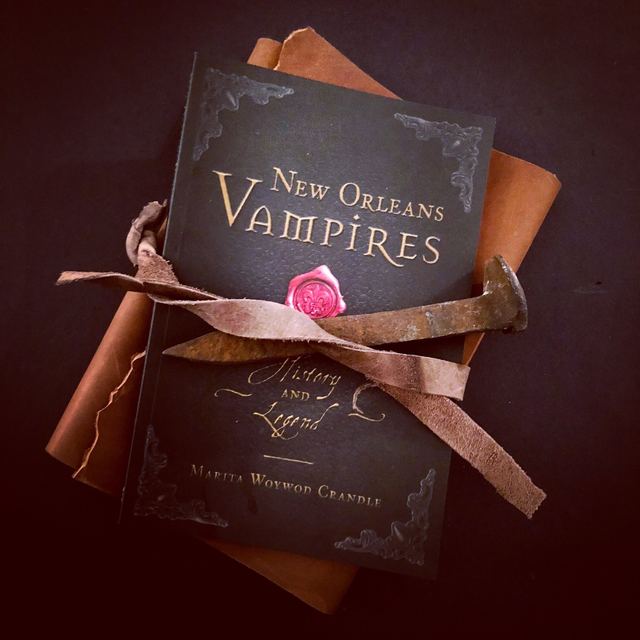
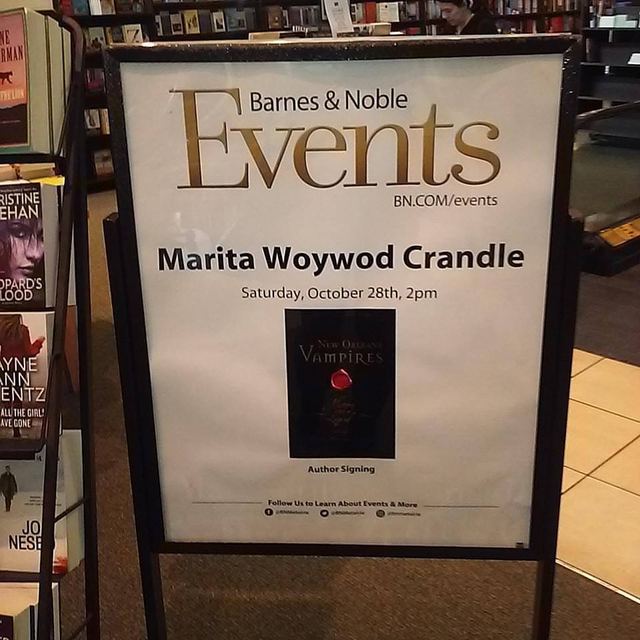
If you're reading this, then you have a taste for the unknown. When I set out to write the book New Orleans Vampires – History and Legend for History Press Publishing, I expected it to be both interesting and a bit difficult to write as I wasn't sure there would truly be enough meat to the legends of French Quarter vampires to fill the pages. However, when I delved into the research, I continued to be surprised and pleased by my findings that the facts were measurably more interesting than the fiction and that these adventures from the past deserved to have legends spawned from the fibers of these fantastical truths.
The Ursuline Convent, located in the French Quarter, has held my fascination since the first time I visited New Orleans and heard the legend of the Casket Girls in 1998. Never did I think I would one day be exploring the attic on a private visit in conjunction with my research for a book on New Orleans vampires. The adventures that life has in store for us never cease to amaze.
It was a stormy New Orleans day when I met my guide for lunch just prior to my anticipated visit to the convent. I was armed with a slew of questions, fully aware of the good fortune of having a representative from the convent at my disposal for the afternoon. I asked about the architecture of the attic and if architectural plans would be available for use in the book. As my guide described the layout of the attic, it seemed too fantastical. I felt myself leaning forward, hanging on her every word. It had not been a simple attic used for storage. Rather, she explained, there were six bed chambers, used to house orphans at the time of their inception. Now those bed chambers remain, but they were abandoned. The entire attic, it seemed, was left empty. I found it very curious that the attic would not be necessary for storage as space in the French Quarter is so valuable. Just six mysterious, seemingly empty bed chambers, above the convent remained. My guide also explained there was an additional room, a bit diabolical, that later sent chills down my spine.
Given this information, the mystery began to intrigue every ounce of my imagination. I had expected to hear that it was a simple attic, as most attics are, filled with boxes and perhaps some interesting artifacts coveted by the Archdiocese.
Thunder and lightning cracked through the grey, ominous clouds above the convent as the electronic gate let my guide's car behind the convent walls. The downpour was steady. We pulled out our umbrellas and made a dash for the door and into the safety of the convent. My heart raced with excitement. This adventure was simply too good to be true.
First, my guide showed me around the convent's first floor. My tour of this floor was highlighted by a charcoal illustration drawn by Mary Hachard, one of the Ursuline pioneers, which depicted the nuns' arrival in New Orleans. A copy of the charcoal can be found in the “Casket Girls” portion of my book. I had a little time to explore downstairs on my own. I was enjoying both the history and the legend as I walked through the halls of the vacant convent, exploring old maps and images of historical figures who had helped shape our past. After a while my guide found me and led me to the stairwell that would take us to the legendary vampires' chambers.
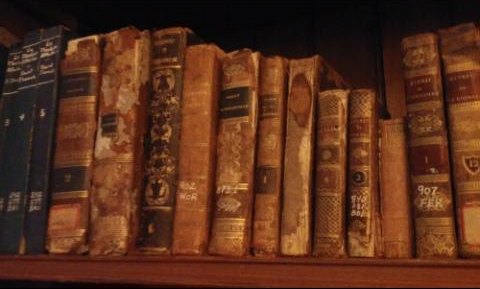
She explained that it was, in fact, the original stairwell from the first convent. Beautiful and solid, the bannister invited us upstairs. I imagined all the colorful history the bannister had witnessed. I ran my hand along the old wood as I made my way up to the second floor. Upstairs, my guide let me into the Archdiocese library. She pointed out old books from the 1700's and 1800's, which were all in French. Books are my weakness – thus I was in my element wandering about the library. My guide once again excused herself for a moment and as she tended to some business in her second-floor office, I noticed there was a beautiful view of the cathedral garden below.
The storm continued feeding my imagination. I felt I had to decide at that moment how I would view my experience there. Was I an historian on a fact-finding mission, was I a writer gaining atmosphere on an adventure to develop and embellish stories for the future, or, the choice I wanted most, was I a tourist, consumed in the legend, who had secretly made her way up to the very diabolical attic that was the prison of the casket girls? It was very difficult finding a happy medium. I truly wanted to dismiss all that was real and just disappear into the fiction and fantasy.
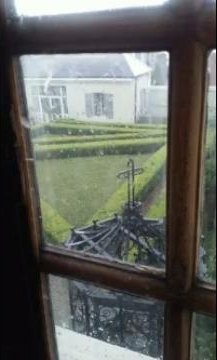
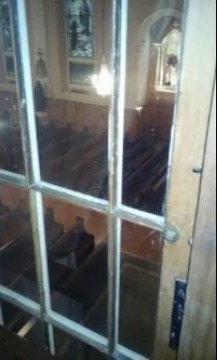
The vantage point of the second floor window afforded me a view of the garden's gazebo and perfectly manicured hedges. This is where the nuns' garden had been, where they grew their medicinal herbs to help cure the ill at the time. There was another window in the wall which separated the convent from the chapel. It allowed me to look into the chapel and onto the pews, the elaborate stained-glass windows and the ornate architecture. I was so entranced that I forgot the attic for just a moment. However, soon my guide arrived and broke the trance, and we headed to the third floor and the feature of my adventure.
At the top of the stairs, I was introduced to a long hall lined with very thin horizontal slats of wood through which dim light peeked its way in, almost like laser beams in an elaborate high security building. Shadows of open doors lay on the floor causing my heart to skip a beat. I hadn't expected the doors to be open. There would be no distance between me and anything that might roam the attic. It was quiet but for the howling of the swirling storm, which seemed anxious for us.
We walked up to the first open door. I didn't really know what I expected to find, but what I did discover there was more eerie than anything I could have imagined on my own – a small room with sections of the floor missing. Perfect rectangular, long sections, in fact, were missing between the beams. These sections were large enough wherein to place coffins. It was almost as if they had been temporarily removed for my visit as there was nothing else in the room and no reasoning behind it.
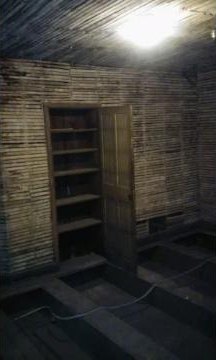
Had vampires occupied these rooms during the day, they would surely have been tortured by the thousands of peering lights that shone their beams through the slats of wood. A vampire would have been forced to remain in the safety of a coffin deep within the hollowed-out floor between these beams.
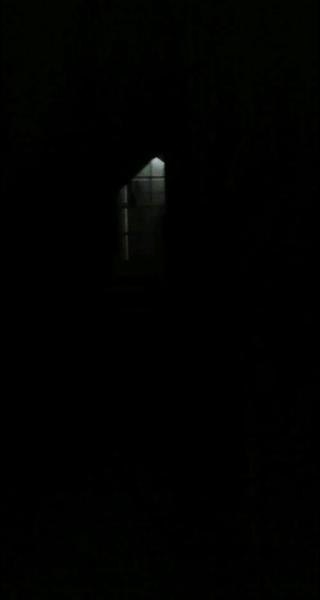
I took a picture of a closed shutter outside one of the dormer windows. The shutter was framed by light begging to come in – this guard made of light stood post outside the convent walls protecting the French Quarter from the monsters rumored to be inside this room. It was very difficult to tear myself away from this particular scene. I stared at the shutter which so many have looked at from the street below wondering what was on the other side. Here I stood, on the inside where the vampires had stood themselves for centuries, aching to escape. The scene was eerie and spectacular, and I think it would have been terrifying at night with no light present as a weapon in my favor.
We passed bed chamber after bed chamber at a slow pace, as I wanted to take everything in. Then we reached the very peculiar little room, the only one with brick floors. It seemed darker than the other rooms and noticeably smaller. Chains with strong, heavy, thick links hung from the very sturdy beams toward the back of the chamber.
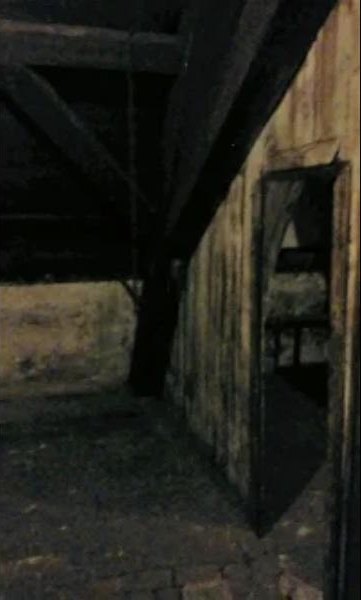
I noticed something else unique to this room. The door to the room was a Dutch door. My guide explained it had been placed there for the nuns' safety. The door allowed the nuns to safely pass food across into the room without having to enter, keeping them out of harm's way. That's when chills ran down my spine. Out of harm's way from what? What in fact were the nuns being protected from? My guide gave the explanation that while the nuns did house young women, they also helped women in any situation, including the mentally ill (and maidens turned vampire?). She said the insane were kept in this room with brick floors, which made it easier to wash away any bodily fluids, and the chains held them when necessary. The door made it easy to slide food across. It was an acceptable explanation, but, at the same time, the room could not have been more perfect to fit the fictional fantasy.
My guide explained that Katrina had done great damage to the attic, and the funding for repairs was substantial and had yet to be obtained. Again, this was an acceptable explanation. However, all that taken into consideration, somehow, to this day, questions remain. Why would the rooms be left completely empty? Why were there perfect sections missing in the floors, just the size to nicely fit coffins? Why were the shutters sealed tightly, rather than letting in a flow of air to help with keeping the convent cool? And why did the chains remain in the very spooky chamber with the brick floors?
Had perhaps the contents of the convent attic been temporarily removed for my visit to appease my curiosity and mask a horrifying truth which has no reasonable explanation?
I sincerely hope so! May the legend live on.
Eternally yours,
Marita Woywod Crandle
Bite II
Comte St. Germain
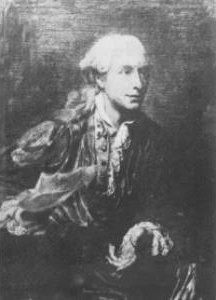
A Letter from Horace Walpole, the fourth Earl of Oxford, regarding Comte St. Germain
An odd man, who goes by the name of Comte St. Germain. He has been here these two years, and will not tell who he is, or whence, but professes that he does not go by his right name. He sings, plays on the violin wonderfully, composes, is mad, and not very sensible. He is called an Italian, a Spaniard, a Pole; a somebody that married a great fortune in Mexico, and ran away with her jewels to Constantinople, a priest, a fiddler, a vast nobleman. The Prince of Wales has had unsatiated curiosity about him, but in vain.Horace Walpole
When you zoom in on the photograph you can see the inscription dedicated to Comte St. Germain. On the top of the left page, the dedication reads: Co. S. Germain. I was completely fascinated by this.
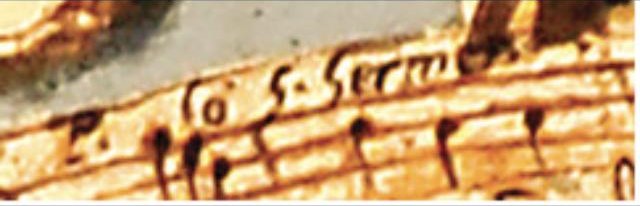
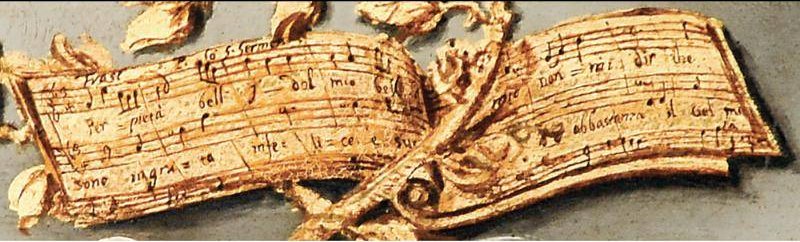
I then found the opera and listened to it while writing the remainder of the chapter on St. Germain daily. Yes, I became obsessed.
The Mysterious Comte St. Germain
The first challenge I encountered was to discover if in fact the Comte St. Germain even ever existed. I was able to discover the documentation of actual letters written about those who had been in his company. The details are recounted in my book, New Orleans Vampires – History and Legend. I was fortunate to discover a very detailed book about the Comte by author Jean Overton Fuller, who mentioned a very curious story in her book. Here is the excerpt from my book regarding St. Germain, the Musician:
It is said that the Comte St. Germain hid his secrets in musical compositions. “Secrets” most likely meaning secrets of his true existence and his magical accomplishments. Even if that is not true, the following is fantastical enough to make one wonder how this man's genius is at all possible.
In the book History of Music, by Charles Burney, the composer of “God Save the King,” he writes:
An opera was attempted April 7th, at the little theatre in the hay-market, under the direction of Geminiani. Prince Labkowitz, who was at this time in London and fond of music, and the celebrated and mysterious Count Saint-Germain attended all the rehearsals. The opera was a pasticcio, and called L'Incostanza Delusa. But Count Saint-Germain composed several new songs, particularly Per Pietà bel idol mio, which was sung by Frasi, first woman, and encored every night.
How was a man of such mysterious opportunities given this opportunity to have his original musical compositions performed, and where did he learn his craft? Perhaps he studied music under the care of the Medici family if in fact that portion of his history is true.
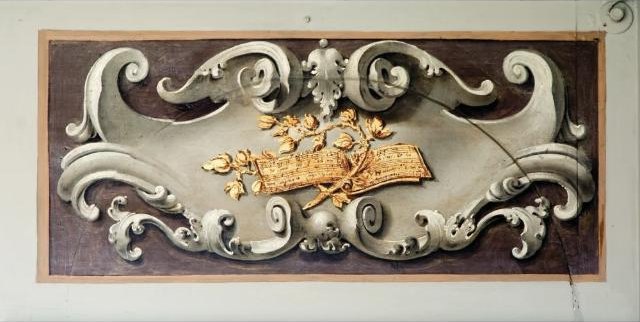
Johann Jakob Heidegger, the manager of the King's Theatre from 1713 to 1734, purchased a very famous elaborate home, “4 Maids of Honour Row,” upon his retirement. A scene painter of the King's Theatre painted several murals in the entrance hall, which are remarkably still present to this day. The paintings were Swiss and Italian landscapes, and over the door opening to the stairwell was painted an open book of music, surrounded with a wreath of acanthus, the symbol of immortality. The book, very curiously, was open to “Per Pietà bel idol mio,” the most popular of Saint Germain's arias. Why would so prominent a figure have that particular music featured on his walls, when the piece had not even been performed at the King's Theatre? It was performed at a very small opera house that was the King's Theatre's competition.
I found this fact fascinating – and was obsessed with finding a photo of that mural. First I had to find information on the home “4 Maids of Honour Row.” I searched everywhere, and eventually found through a Realtor in England that the mansion was currently on the market. She told me that the murals were still intact in the home, but that she could not get a photograph for me. I then contacted a historical organization in England which ultimately was also not able to help me. Finally, I was able to locate a photographer, David Wrightson, who had been commissioned to photograph the mansion some time prior.
The day I received the e-mail from him confirming that he had in fact taken the photos and that he would be honored to sell the use of his photograph for my book – I celebrated with a bottle of champagne. Now, I wasn't just taking Jean Overton Fuller's word for it that this mural had been painted – I had proof.
Bite III · Marie Laveau & Voodoo
The Sorcerer's Dance
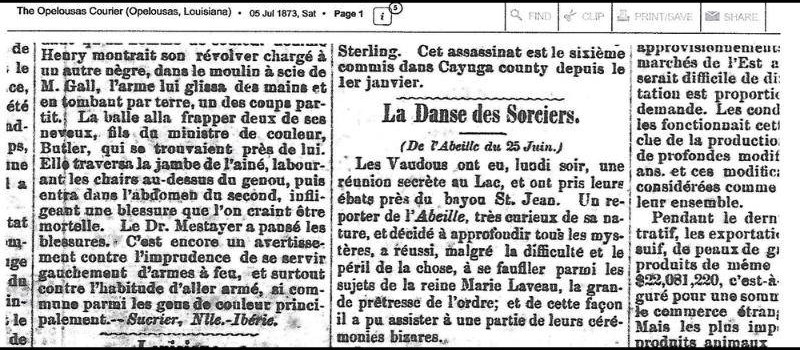
Doing the last bit of research for my Josie Arlington book, regarding voodoo in the brothels, I found a real treasure. This is an article published in The Opelousas Courier, July 5, 1873, reprinted from an article in L'Abeille (The Bee) from June 25, 1873. The Opelousas was also all in French. I've translated it here best I could…
The Sorcerer's Dance
Voodoo had, on Monday night, a secret meeting at the Lake, and took their lessons near the bayou St. John. A reporter of The Bee was very curious of its nature, and decided to investigate all the mysteries. He succeeded, in spite of the difficulty and the peril of the thing, to sneak by the Queen Marie Laveau, the great priestess of the order; and in this way he was able to attend some of their bizarre ceremonies.
Negroes are not the only members of this dark association, there are also many white women and white men who belong to this sect; and it does not support the least believers and the least zealous.
These meetings of Voodoo are only orgies that cannot be described.
After having killed a black cat and a black hen, and having collected their blood in a vase, they mark their foreheads and take each other by the hand, they start a frenzied round and finally get rid of all their clothes. It is after that, an infernal sabbath, sneers, evocations – and dances that last until morning.
Monday evening, Marie Laveau being ill, it is the princess Caroline, the presumptive heiress to the crown, who presides at the meeting – a woman of about forty years, a jet black, which seems to have a great influence.
She was richly dressed and carried a scepter in her hand. At her side were six young women, three black and three white, who served her as maids of honor. The bonfires had been lighted, and the Voodoo danced all over, repeating cabalistic words.
It is only at the approach of the day that they have disappeared so as not to be forced to take refuge.

New Orleans has a reputation as a home for creatures of the night.
In the early colonial days, rumors swirled about the Casket Girls, mysterious maidens who sailed from France with peculiar casket-shaped boxes. In the early 1900s a charismatic man moved to the French Quarter who eerily resembled a European aristocrat of the same name from a century before. During the Great Depression, two brothers terrorized the town with their hunger for living blood. Marita traces these legends back to their origins.
What Readers Are Saying
“A highly informative and entertaining book, grounded in historical research.”
“Each of the four stories are well-known, well-documented, and well-researched.”
“Simply fangtastic!”
History · 2020
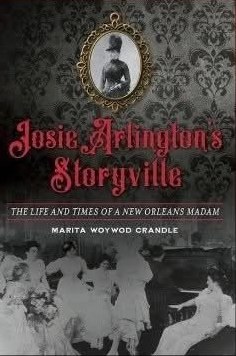
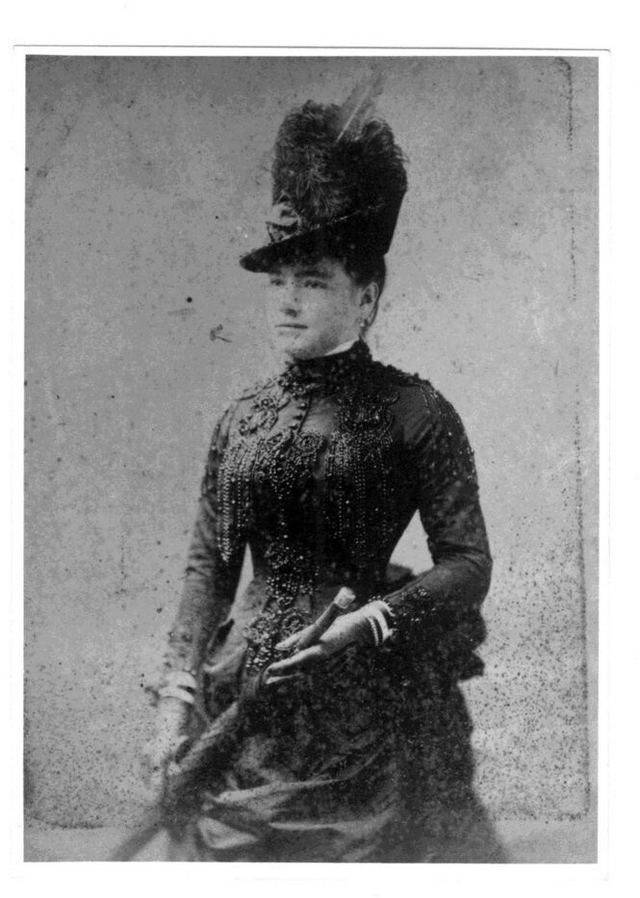
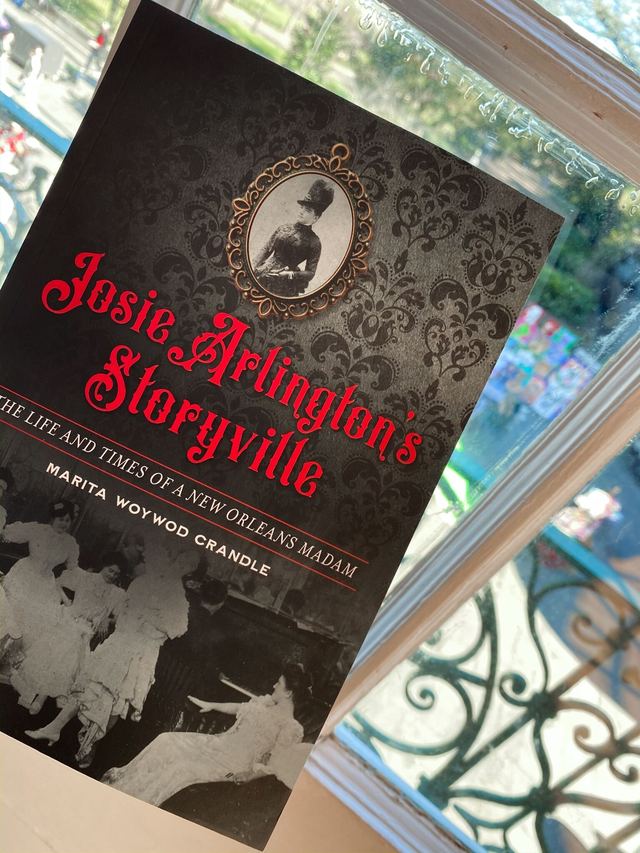
Josie Arlington's Storyville
The Life and Times of a New Orleans Madam
Buy from PublisherAmazonThe life of Josie Arlington, one of the most famous madams of Storyville, the legendary red-light district of New Orleans, and the world she built.
What Readers Are Saying
“Entertaining and informative history of Josie Arlington and Storyville.”
“A vivid and interesting journey into the life of New Orleans madam, Josie Arlington.”
“This book does not disappoint.”
Appearances
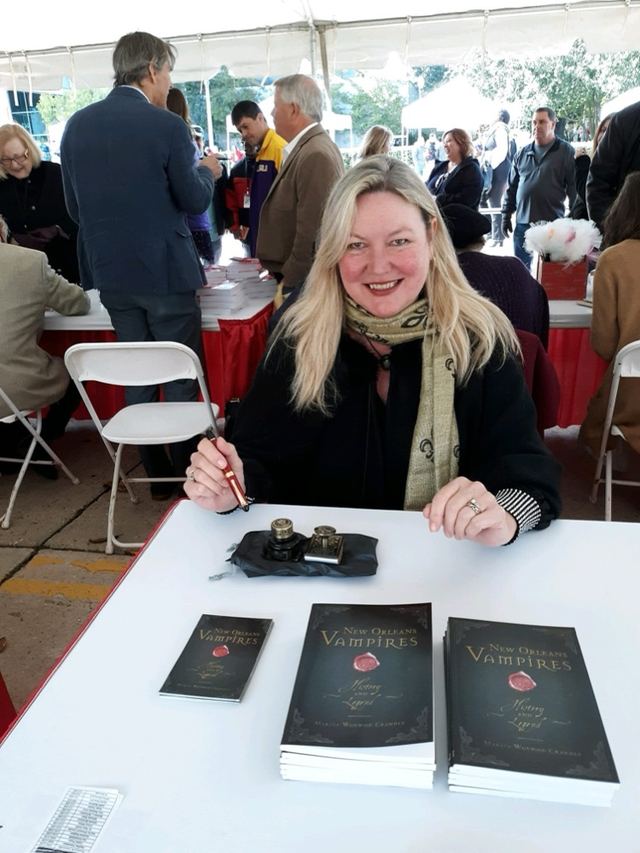
- 2020Louisiana Book Festival, panel and signing
- May 2020Tubby & Coo's Bookstream: watch


Memoir & History · 2019
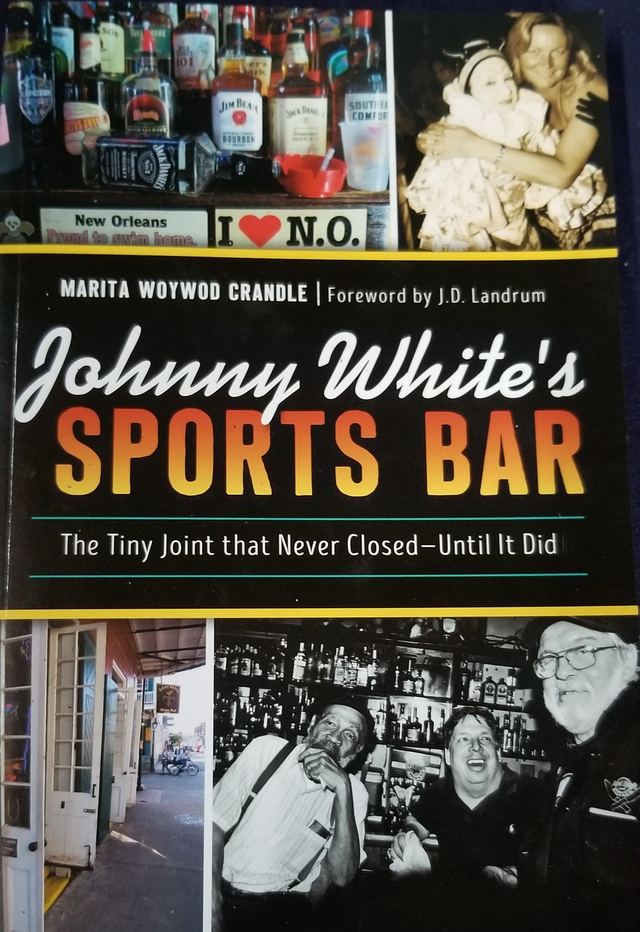
Johnny White's Sports Bar
The Tiny Joint that Never Closed—Until It Did
Buy from PublisherAmazonKnown as “the locals' living room,” Johnny White's was the only twenty-four-hour bar on Bourbon Street.
Regulars like Ruthie the Duck Girl and Perri the Hobo came through on their rounds. During Hurricane Katrina it stayed open as a refuge, even when authorities ordered it closed at gunpoint. When the lease ran out in 2012, patrons sent it off with a jazz funeral.
Marita tended bar and managed the place for more than eleven years. This book is a love letter from the bar.
What Readers Are Saying
“A must-read for Quarterites, dive bar aficionados…”
“My husband encouraged me to borrow this book… and he was right.”
“The anecdotes have a certain New Orleans flavor.”
In the Press
- WWL-TVBar that stayed open during Hurricane Katrina remembered in new book
- AmbushBook Review: Johnny White's Sports Bar


Jake Campbell arrives in New Orleans with his dog and finds a French Quarter full of vampires, witches, werewolves, the Rougarou, ghosts, and voodoo.
First released a chapter at a time, this is a melting pot of the supernatural. Each chapter ends with a recipe from Chef Chris Dunn of the New Orleans Vampire Café and the Vampire Apothecary.
What Readers Are Saying
“Brings to life local New Orleans legends of creatures that suck in the night.”
“Sexy, full of conflict, heart warming moments.”
“A captivating blend of gothic fiction, culinary delight, and New Orleans mystique.”
Appearances
- Oct 26, 2024Book signing at the Vampire Apothecary

Novel · 2025
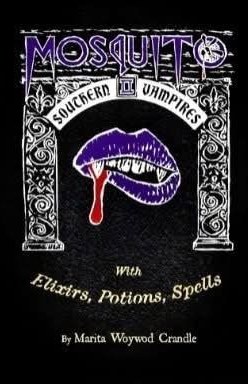
Mosquito II – Southern Vampires
with Elixirs, Potions, and Spells
Buy from PublisherAmazonJake Campbell is back, hunted by vampires and haunted by lovers, and he has to survive New Orleans' darkest secrets.
The sequel carries on the Penny Dreadful tradition, with potions, elixirs, and spells between the chapters.
What Readers Are Saying
“This is a fantastic vampire read that you will not forget!”
Appearances
- Oct 2025 – Mar 2026Mosquito II Illustration Exhibit, work by Taylor Chartrand at Boutique du Vampyre
- Oct 14, 2025Released by Pelican
Message Received
Thank You
Your message has reached Marita. If you entered the Carter Brothers drawing, your receipt has been received and you're in. Good luck!
Summon the Author
Contact
For questions, interviews, book signings, tours, appearances, and the Carter Brothers pre-sale drawing.